

STAY UPDATED WITH
What Is Stablecoin Staking and How Does It Work in 2026?

Crypto participation has changed dramatically over the past few years.
While early adopters focused on volatile token speculation, a growing number of users now prioritize stability, structure, and predictable participation models.
This shift explains the rapid rise of stablecoin staking — a mechanism that allows users to engage with digital asset infrastructure without relying on constant price swings.
What Is Stablecoin Staking?
Stablecoin staking refers to committing USD-pegged digital assets such as:
-
USDT
-
USDC
into a structured system designed to generate participation-based returns rather than speculative gains.
Unlike traditional crypto trading, staking focuses on:
-
defined terms
-
operational consistency
-
reduced emotional decision-making
Why Stablecoins Became Central to Staking
Stablecoins solve one of crypto’s biggest problems: volatility.
Key advantages include:
-
predictable dollar value
-
simpler accounting
-
easier long-term planning
-
reduced exposure to market crashes
Because of this, many modern staking platforms — including LumaStake — prioritize stablecoin participation instead of volatile tokens.
How Stablecoin Staking Works in Practice
Although implementations vary, the general process is simple:
-
Deposit USDT or USDC
-
Choose a staking tier and duration
-
Participate in a structured return mechanism
-
Receive rewards at the end of the term
The emphasis is on clarity and discipline, not fast trading.
Why Structured Participation Matters in 2026
After multiple market cycles, users increasingly value:
-
transparency
-
controlled exposure
-
predictable mechanics
-
reduced speculation
Stablecoin staking aligns with this maturing mindset.
Conclusion
Stablecoin staking represents a major evolution in crypto participation —
shifting focus from excitement to sustainability and structure.
Platforms like LumaStake reflect this transition by offering
clear staking terms built around USDT and USDC participation.
CTA:
Explore how structured stablecoin staking works on LumaStake and discover a more disciplined way to participate in crypto.
Share this article


Recommended Articles
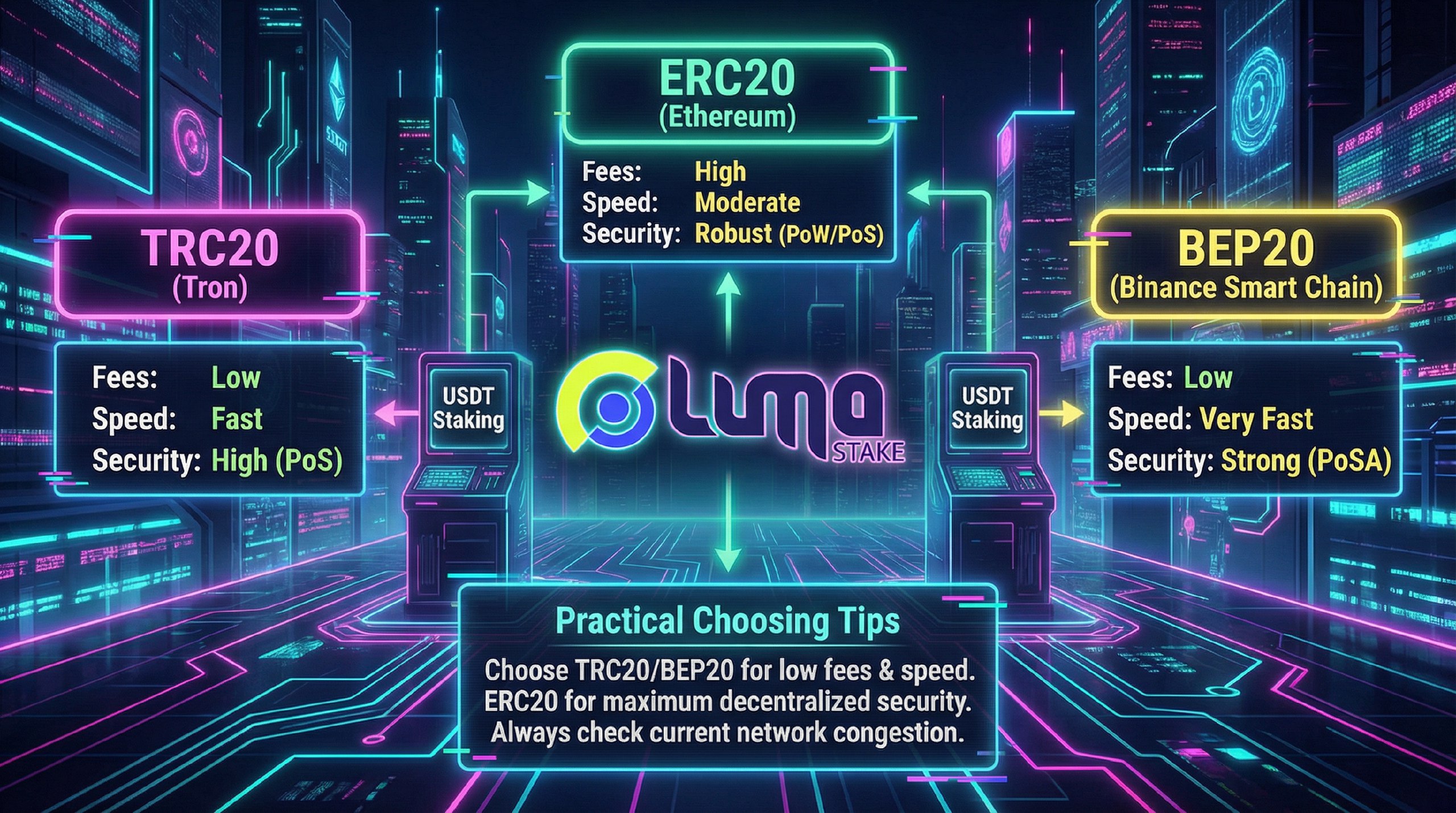
Best Networks for USDT Staking: TRC20 vs ERC20 vs BEP20
When users first explore stablecoin staking, they often focus on returns and tiers.But in practice, one of the most important decisions happens earlie...
Read More
How Market-Neutral Crypto Strategies Reduce Volatility Exposure
Most crypto strategies depend on one thing:price going up. Market-neutral approaches are different.They aim to function regardless of market directio...
Read More
USDT vs USDC: Which Stablecoin Is Better for Staking?
At first glance, all dollar-pegged stablecoins seem identical.In reality, USDT and USDC differ in structure, liquidity, and ecosystem behavior, which...
Read More